Elkind could have gone down many spur tracks, into grand discussions of the feasibility of rail and lofty, ongoing debates about quality of life, cosmopolitanism, public subsidies, and transportation economics. He does not.
Smart Growth Literature Hits a Cul-du-Sac
Where is Robert Bruegemann when you need him?
History of Future Cities

Brook contends that the four cities were not built to celebrate their respective cultures or to build indigenous economies but rather to establish beachheads of western modernity on incongruous and otherwise backwards soils.
Beware the ‘Density Cult’
Joel Kotkin, Los Angeles-based urban theorist and persistent critic of downtown revitalization, would have you believe that advocates of smart growth. . . all want to turn their cities into putrid slums.
California Cities Desire Streetcars
While the state plans for its proposed high-speed rail network, a raft of California cities are pursuing a more twee type of rail travel.
“Going Solo: The Extraordinary Rise and Surprising Appeal of Living Alone”
Eric Klinenberg’s Going Solo: The Extraordinary Rise and Surprising Appeal of Living Alone offers a potentially instructive glimpse into how the other half lives: some out of preference, others out of desperation.
New Light Rail Line Opens Up World of TOD Possibilities
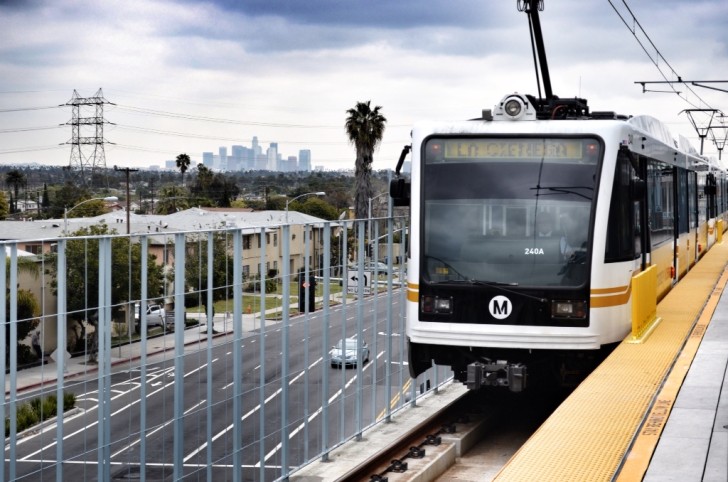
Now that the Westside once again has the “T,” efforts to figure out the “OD” have only just begun.
Book Review: Aerotropolis Promotes Planning Where Land Meets Sky

The somewhat unnerving implication of Aerotropolis is that the great cities of the global age aren’t so much cities but rather are catchment areas for airports — specifically, airports that fling people and goods across oceans.
CP&DR Holiday Book Roundup
Over the past few years, publishers have put out enough books on urban sustainability to make Al Gore blush. Unfortunately, making a city sustainable takes a lot longer than does writing a book about making …
Reclaiming the Interstates from Ike
Just in case you thought that suburbanization of the 20th century was a joint venture between God, the invisible hand, and a pot of gold delivered by the Freedom Fairy, Earl Swift’s Big Roads might …
50 Years Later, Jacobs Still Leads a Sorority of Dissent
There must have been something in the water affecting women in the early 1960s, and it wasn’t just DDT.
From SoHo to Yolo: Community Arts Grants Encourage Placemaking
11 national foundations plus the National Endowment for the Arts announced the founding of ArtPlace America, a nationwide initiative to drive revitalization in cities and towns with a new investment model that puts the arts at the center of economic development.
Parking Reform Measure Strains Relationship Between Infill Developers, Housing Advocates
There was a time when the biggest opponents to infill development were the interstate highway, the barbeque grill, and the American dream. Following the failure of Assembly Bill 710, you might be able to add advocates of affordable housing to the list.
Book Review: ‘Making the San Fernando Valley’
Early in her account of the development of San Fernando Valley, Laura R. Barraclough describes an 1880s-era photo that captures the wholesome spirit of what would become Los Angeles’ great bedroom community: “Captioned ‘Lankershim’s best …
Book Review: Julius Shulman Los Angeles

Yes, it’s a coffee table book. But, even for urban planning wonks, it reveals more about how the built environment evolves than could a million pages of zoning code.
SB 375 Draws Ire of Tea Party
Environmentalists and many fans of cities hail SB 375 as an important step towards both curbing global warming and creating more pleasant cities. But Tea Party activists nationwide have fought against local and regional planning efforts, often invoking the United Nations’ “Agenda 21” sustainable development effort as the enemy.
‘Parklets’ Create Public Space, 120 Square Feet at a Time
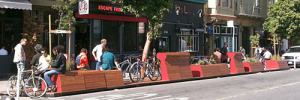
Arguably the most adorable urban space to come along in a long time, parklets are to Golden Gate and Griffith parks what amoebas are to elephants. They are multiplying, not by mitosis but by entrepreneurship, all over San Francisco – with Oakland, Long Beach, and other cities in California and elsewhere showing interest in the notion that parking spaces aren’t just for cars anymore.